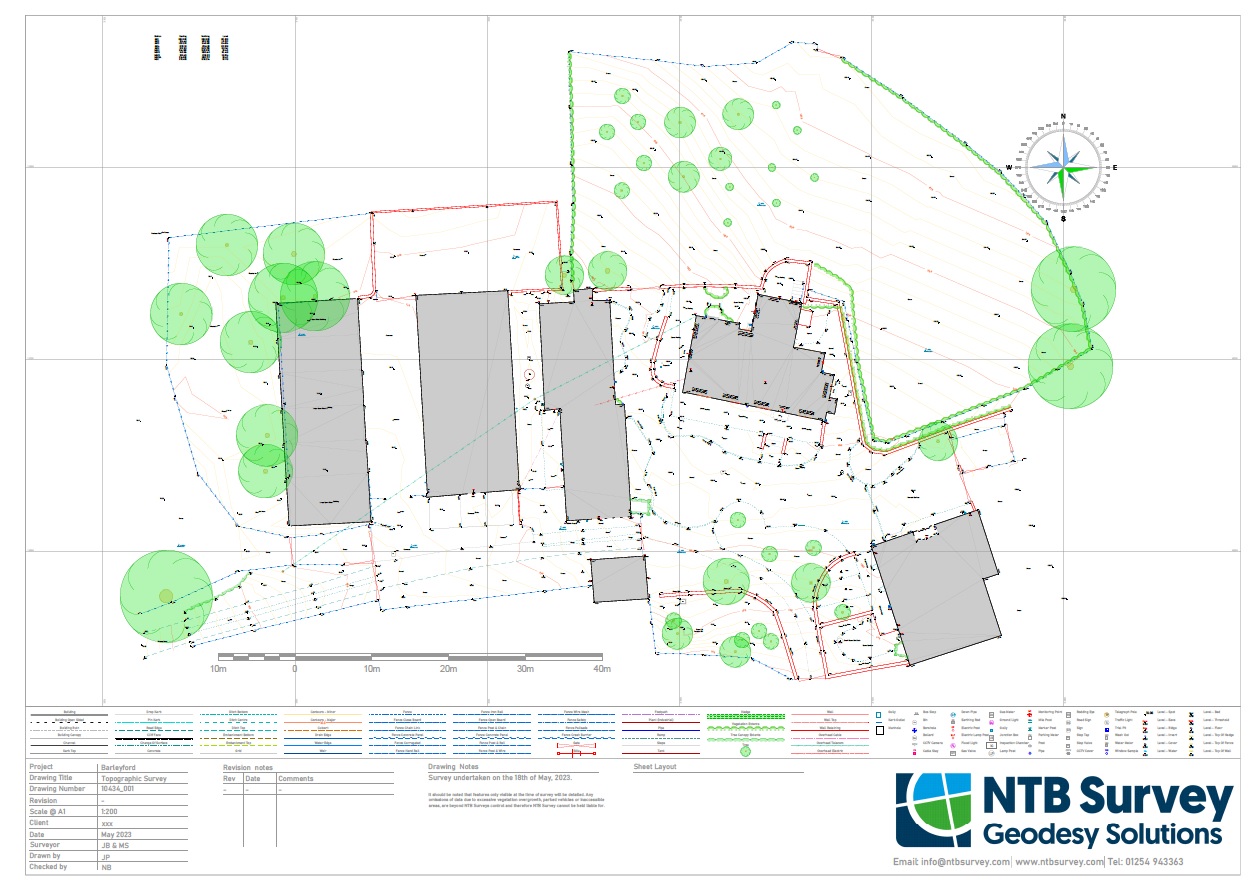
Topographical surveys play a significant role in the area of land development, providing important details about the topography and contours of a site. These surveys serve as the bedrock for a variety of projects, from housing developments to complex infrastructure undertakings. By capturing the nuances of a landscape, including elevation, gradients, and pre-existing features, topographical surveys ensure that architects, engineers, and developers can make wise decisions that facilitate positive outcomes.
Understanding what a topographical survey is and why it is important can greatly enhance the efficacy of any land development initiative. Whether you’re starting a new build, planning an expansion, or assessing a substantial commercial site, these surveys provide the key data needed to recognize site constraints and comply with regulatory regulations. As technology continues to evolve, the methods and tools used in topographical surveys have greatly enhanced, offering greater accuracy and efficiency. This article will delve into the key aspects of topographical surveys, exploring their significance, processes, and the countless benefits they bring to multiple projects.
Understanding Topographical Mapping
Topographical mappings constitute comprehensive illustrations of the planet's surface, exhibiting the natural and artificial characteristics of a designated area. Such surveys depict the terrain's contours, elevation changes, aquatic features, vegetation, roads, and structures, providing a comprehensive overview of the landscape. Crucial for various land improvement projects, terrain surveys serve as key tools for planners, technicians, and developers, ensuring that they can visualize the site precisely and make informed choices.
Carrying out a topographical survey is essential during the preparation phases of any construction project. By assessing the existing conditions of the land, these surveys help in identifying potential challenges and opportunities. They can affect various design aspects, such as water management systems, greenery arrangements, and arrangement, directly impacting the project's efficiency and outcomes. A thoroughly done survey can minimize risks and ensure conformance with local laws, eventually promoting positive outcomes.
Current technology has greatly boosted the exactness and productivity of topographical surveys. Techniques like global positioning systems, drones, and lidar have revolutionized data acquisition, allowing surveyors to gather exact information in shorter time. These advancements not only improve the dependability of the survey data but also provide enhanced images, allowing stakeholders to more comprehensively understand the site. By taking advantage of these advanced tools, project teams can ensure that they have a thorough grasp of the terrain, causing better designs and realizations.
Importance in Land Development
Terrain assessments play a crucial role in land development by providing comprehensive information about the terrain, including the contours, elevations, and natural features of a site. Topographical Surveys Staines-upon-Thames Surrey is necessary for builders, engineers, and planners to make educated decisions about site arrangement and design of structures. Understanding the topography aids in identifying optimal locations for facilities, infrastructure, and water management solutions, ultimately contributing to the project's success rate and functionality.
Moreover, topographical surveys help to spot potential challenges that may arise during construction. Issues such as elevated areas, water drainage patterns, and soil stability are better understood through accurate survey data. By identifying these site constraints early in the planning process, project teams can develop effective mitigation strategies, reducing the likelihood of financial delays and modifications later in the project lifecycle.
Moreover, topographical surveys support adherence with local regulations and environmental considerations. Many jurisdictions require specific survey information for planning applications and permits. By ensuring that the development aligns with zoning laws and environmental protections, topographical surveys help stakeholders avoid legal issues that can disrupt or derail a project. Thus, investing in a comprehensive topographical survey is not just beneficial; it is necessary for the successful development of land.
Modern Technologies in Topographical Surveys
The emergence of modern technology has changed topographical surveys, making them speedier, more accurate, and affordable. Traditional methods involved tedious processes like hand measurements and mapping, which were simultaneously time-consuming and liable to human error. Today, tools such as GPS, UAVs, and laser measurement have altered data collection and analysis. These technologies enable surveyors to collect vast amounts of data rapidly, providing detailed elevation models and topographic maps with remarkable detail.
Drones, in notably, have become known as a game-changer in the field of topographical surveys. Equipped with detailed cameras and sensors, they can map large areas in a small of the time it would take with ground-based methods. The photographic data collected can be processed using photogrammetric analysis to create three-dimensional models and precise contour maps. This not only improves accuracy but also allows surveyors to assess challenging terrain securely and effectively.
Another noteworthy advancement is the integration of Geographic Information Systems (GIS) with topographical surveying. GIS technology enables the visualization, examination, and interpretation of spatial data, making it simpler for project stakeholders to understand the nuances of a site. By integrating survey data with GIS, engineers and planners can identify site constraints, evaluate environmental impacts, and make informed decisions during the development phases, eventually leading to better project outcomes.